
Building a New Home vs. Buying an Existing Home: What Should You Consider?
Building a New Home vs. Buying an Existing Home: What Should You Consider?
Finding the right home often begins with a familiar routine. You browse listings, compare prices, visit properties, and imagine how your life might fit within the walls of each one.
But what happens when you find the neighborhood you want to live in, yet none of the available homes quite fits your needs?
For some buyers, the answer is to keep searching. For others, it is to consider building a new home.
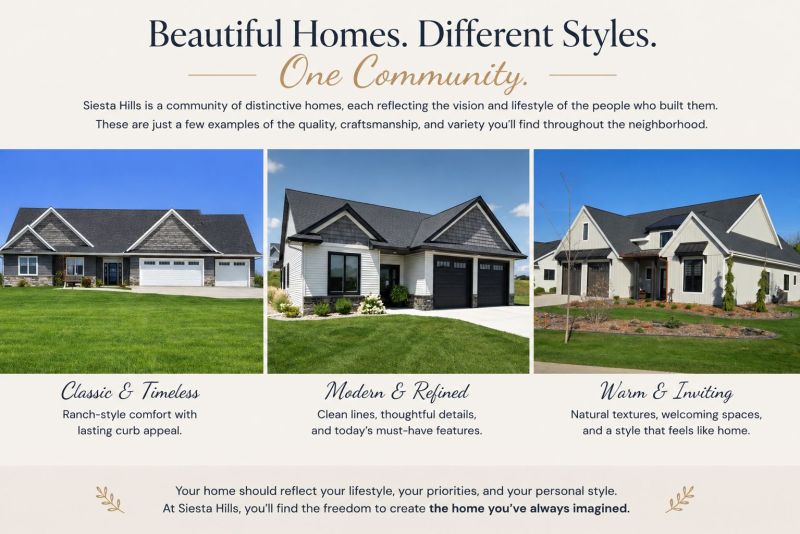
At Siesta Hills in Mankato, Minnesota, building offers an opportunity to create a home around your own priorities while becoming part of an established residential community. It is a different approach to homeownership, and one worth understanding before deciding whether to buy an existing home or build something new.
The question is not simply which option costs less. It is which option provides the right combination of cost, comfort, location, and long-term satisfaction.
Is Building a New Home More Expensive Than Buying an Existing Home?
One of the most common assumptions about new construction is that building a home must cost more than purchasing an existing one.
Sometimes it does. But the comparison is not always as straightforward as looking at two asking prices.
An existing home comes with a completed floor plan, established landscaping, installed mechanical systems, and finishes selected by previous owners. Its purchase price reflects the property as it stands today, including its condition, location, and current market demand.
A newly constructed home begins with a different set of expenses. Land, site preparation, labor, materials, permits, utilities, financing, and landscaping all contribute to the final cost. Depending on the construction agreement, some of these expenses may be included in the builder’s price while others remain the buyer’s responsibility.
Building also introduces the possibility of changes, delays, or unexpected costs during construction.
Neither option is automatically less expensive.
The more useful comparison is the total cost of obtaining a home that meets your needs, including any improvements an existing property would require and the additional expenses involved in building.
Building Gives You More Control Over Where Your Money Goes
One of the most meaningful differences between buying and building is the ability to make decisions before the home is completed.
When purchasing an existing property, you are buying a collection of choices made by someone else. The kitchen layout, flooring, cabinetry, bathrooms, lighting, and storage were selected for a different household.
Some of those choices may be exactly what you want. Others may require compromise or future remodeling.
Building offers an opportunity to make many of those decisions yourself.
Perhaps an accessible floor plan matters more to you than decorative upgrades. You may prefer additional garage space, a larger kitchen, wider doorways, or a screened outdoor living area. You might choose low-maintenance exterior materials or invest in energy-efficient equipment that supports your long-term ownership goals.
Not every decision requires spending more. Some involve choosing one feature instead of another or postponing an upgrade that can easily be added later.
That flexibility can be particularly valuable for buyers who know how they want to live and would rather make those decisions during construction than remodel an existing home afterward.
Consider the Cost of Improvements to an Existing Home
An existing home may be ready to move into, but that does not necessarily mean it will remain unchanged after the purchase.
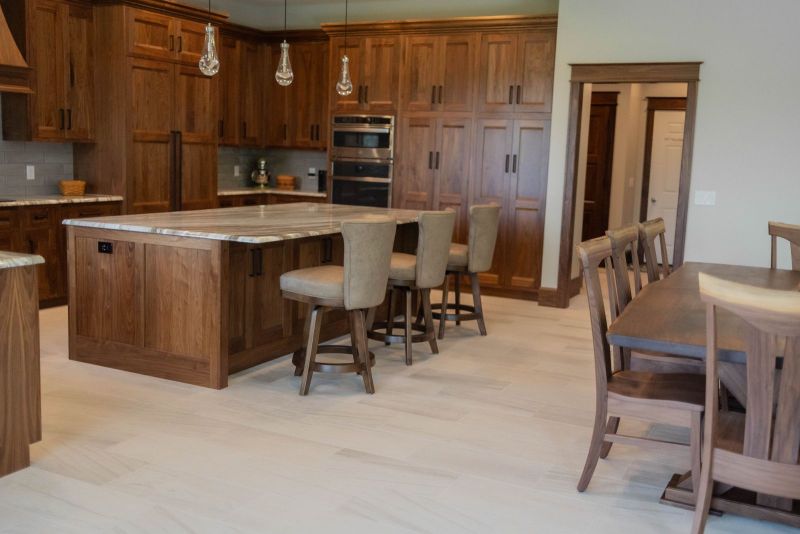
Some buyers discover that the kitchen needs updating, the flooring is not to their taste, or the bathrooms would benefit from remodeling. Others may face more substantial expenses involving roofing, windows, heating and cooling equipment, or exterior maintenance.
These costs vary considerably from one property to another. A well-maintained existing home may require very little work, while another may need substantial investment.
Before comparing an existing home with new construction, consider what you would actually spend to make the existing property suitable for your household.
A home with a lower purchase price is not necessarily the less expensive choice if significant improvements are required soon after moving in.
At the same time, a newly constructed home is not maintenance-free. Equipment will eventually require service, materials will age, and landscaping and other exterior features will need ongoing care.
The advantage of building is that many of these components begin their service life at approximately the same time, and the buyer may have greater influence over their initial quality and selection.
Building a Home Around the Years Ahead
For many buyers, choosing a home is as much about the future as it is about the present.
A floor plan that works today may become less convenient as circumstances change. Stairs, narrow doorways, limited storage, and difficult-to-maintain exterior features can become more important over time.
Building provides an opportunity to consider those needs before construction begins.
Main-floor living, accessible bathrooms, wider interior passages, convenient laundry facilities, and thoughtfully placed storage can make everyday life easier. Additional garage space may accommodate hobbies, tools, or recreational equipment. Outdoor living areas can be planned around how the household expects to use them.
These are not necessarily luxury features. They are practical decisions that can help a home remain comfortable and useful through different stages of life.
Making such choices during construction may also be simpler than modifying an existing structure later.
Why the Neighborhood Matters as Much as the House
A home is more than its floor plan, construction materials, and interior finishes.
It is also part of a neighborhood.
When comparing homes, buyers often consider the surrounding properties, nearby services, community amenities, and the overall atmosphere of the place where they will spend their time.
Those considerations are particularly important when deciding where to build.
At Siesta Hills, buyers have the opportunity to consider new construction within a community that already has homes, landscaping, shared amenities, and an established neighborhood identity.
The clubhouse, swimming pool, pickleball courts, walking paths, and gathering spaces provide opportunities for recreation and connection beyond the individual homes.
For someone considering a new home, seeing an established community can make it easier to imagine what daily life might look like after construction is complete.
It also allows the decision to begin with the location rather than the house itself.
Instead of purchasing a home and hoping to enjoy the neighborhood around it, a buyer can first decide whether Siesta Hills is a place where they would like to live, then explore the possibility of creating a home that fits within it.
For a closer look at the community itself, read What Is It Like to Live at Siesta Hills?

Does Building a New Home Mean It Will Increase in Value?
New construction can be an appealing long-term investment in a home and lifestyle, but building does not guarantee an increase in property value.
Future resale value depends on many factors, including the housing market, location, construction quality, property condition, neighborhood demand, and the price originally paid.
Some improvements that provide considerable personal enjoyment may not produce an equivalent increase in resale value.
Buyers considering new construction should understand both the construction cost and how comparable homes are valued in the surrounding market.
An independent appraisal, a review of comparable property sales, and conversations with professionals familiar with new construction can help provide perspective.
The goal is not to assume that a newly constructed home will automatically be worth more in the future. It is to make a well-informed decision about a home that meets your needs today while remaining mindful of its long-term market appeal.
When Buying an Existing Home May Make More Sense
Building is not the right choice for every buyer.
An existing home may offer the advantage of immediate availability. Buyers can walk through the finished property, evaluate its condition, see the surrounding landscaping, and understand exactly what they are purchasing before closing.
Established homes may also offer architectural details, mature trees, or locations that are difficult to duplicate with new construction.
For buyers facing a short moving timeline, an existing home may be the more practical option.
Building generally requires more patience. Construction schedules can change, design decisions take time, and the final cost must be carefully understood.
Buyers should also review construction agreements, financing arrangements, warranties, and the responsibilities of everyone involved in the project.
Independent professional guidance can be useful throughout that process.
The right decision depends on personal priorities, financial circumstances, timing, and the availability of suitable properties.
Considering Building a Home at Siesta Hills?
There is something appealing about finding a community where you want to live and then creating a home around the way you want to live within it.
For some buyers, that opportunity is the reason to consider building.
At Siesta Hills in Mankato, the decision can begin with the neighborhood itself. Buyers can explore the community, consider available homesites and housing opportunities, and decide whether new construction might provide a better fit than purchasing an existing property.
Building still requires thoughtful planning, realistic budgeting, and an understanding of the construction process. But it offers something that buying an existing home cannot always provide: the opportunity to make important decisions about the home before those decisions become permanent.
Whether you choose to build or buy, the goal is the same. Find a home that supports the life you want to live, in a place where you genuinely want to spend your time.
To learn more about the homes, homesites, and opportunities available within the community, visit Could You See Yourself Living at Siesta Hills?