
Why Some Buyers Choose to Build Instead of Buy an Existing Home
Why Some Buyers Choose to Build Instead of Buy an Existing Home
For many homebuyers, the search begins in the most familiar way: browse listings, compare asking prices, tour a few homes, and decide which existing property comes closest to what they want.
That approach works well for many people. It can also quietly narrow the conversation before another possibility has been fully considered.
Building a home is often dismissed with a simple assumption: it must cost more. Sometimes it does. Sometimes it does not. More importantly, the comparison is rarely as straightforward as placing the price of a new home beside the price of an older one.
An existing home includes someone else’s choices, someone else’s timeline, and often someone else’s deferred maintenance. A newly constructed home allows the buyer to decide where the money goes, which materials matter, which features are worth adding, and which expenses can be avoided altogether.
The better question may not be whether building is always less expensive. It may be whether building allows a buyer to receive more of what they actually value for the money they are already prepared to spend.

Building Makes the Cost More Visible
When buying an existing home, the final price reflects much more than the current cost of labor and materials. It may include the seller’s equity, market demand, prior renovations, location, negotiation, real estate commissions, and the premium attached to a home that is already complete and available.
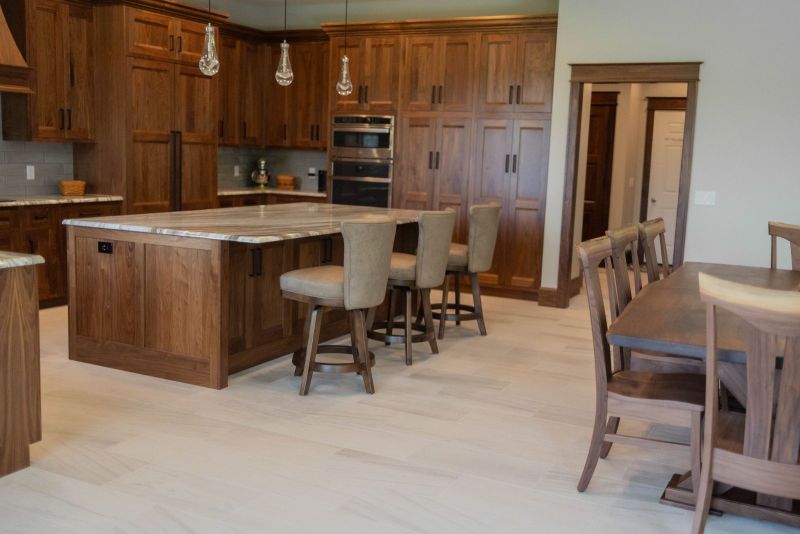
When building, the costs are often easier to see. Concrete, framing, windows, cabinetry, flooring, appliances, lighting, plumbing fixtures, landscaping, and labor become individual choices rather than hidden parts of a finished price.
That visibility gives buyers control.
One person may choose to invest more in the kitchen because it will be used every day. Another may place greater value on an accessible floor plan, additional garage space, energy efficiency, low-maintenance exterior materials, or a screened outdoor area. Someone else may decide that certain decorative upgrades can wait.
Building does not eliminate cost. It allows the buyer to direct it.
That distinction matters because paying less for a home that requires immediate remodeling, replacement, or compromise is not always the same as receiving better value.
You Are Not Paying to Undo Someone Else’s Decisions
Existing homes often appear less expensive until the next layer of costs begins to emerge.
The kitchen may be attractive but not arranged the way the buyer would have chosen. Flooring may need to be replaced. Mechanical systems may be approaching the end of their useful lives. Windows, roofing, siding, appliances, insulation, or landscaping may require attention sooner than expected.
Some of those improvements are optional. Others are simply delayed expenses.
A buyer may also pay a premium for renovations that look appealing in a listing but have little personal value. The previous owner chose the materials, colors, layout, and priorities. The next owner pays for them whether they would have made the same choices or not.
Building offers a different path. The home begins with the buyer’s priorities rather than requiring the buyer to adapt to decisions that were made years earlier.
The Advice Buyers Receive Is Often Shaped by the Business Providing It
Most buyers begin with a real estate professional because existing homes are where the traditional market is easiest to see. Realtors know listings, comparable sales, negotiation, and the process of transferring an existing property. Their role is valuable, but their business naturally centers on completed transactions.
Builders approach the decision from another direction. They understand construction methods, material choices, timelines, and what it costs to create the home. Their expertise is essential, but they may not always be the best source for judging resale demand, neighborhood appreciation, or how the wider market will value one choice over another.
Neither perspective is necessarily wrong. Neither is complete on its own.
This is one reason building can remain surprisingly difficult for consumers to evaluate. The professionals most familiar with resale may have little involvement in a direct construction agreement, while the professionals most familiar with construction are focused on creating the home rather than forecasting its future market value.
A thoughtful buyer may benefit from separating those questions.
The builder can explain what the home will cost to create. An independent appraiser can help evaluate how the proposed home may compare within the market. A lender can explain financing. An attorney can review agreements. An inspector can provide independent construction oversight. A real estate professional with genuine new-construction experience may also offer useful perspective when their role and compensation are clearly understood.
Building directly with a developer or builder may simplify parts of the transaction and reduce layers that do not add value for a particular buyer. It does not mean buyers should avoid professional guidance. It means the guidance should be independent, transparent, and chosen because it protects the buyer’s interests.
Today’s Construction Cost Becomes Tomorrow’s Existing Home
One of the least discussed advantages of building is that a buyer is purchasing labor and materials at today’s market value.
Once the home is complete, those same materials are no longer estimates on a proposal. They are part of an existing property.
If labor costs rise, the work has already been completed. If material costs increase, the home already contains them. If the surrounding community becomes more desirable, the buyer already owns a place within it.
This does not mean every newly constructed home will appreciate immediately or equally. Housing markets change, individual properties differ, and no increase in value can be guaranteed. It does mean that building converts current construction costs into a finished asset at a known point in time.
For buyers planning to remain in a home for many years, that can be an important way to think about value.
What the Earliest Homes at Siesta Hills Suggest
The first residents began moving into newly completed homes at Siesta Hills only a few years ago. Since then, some of those homes have experienced substantial increases in market value, with observed gains varying widely by the individual property, timing, design, location within the community, and later improvements.
In several cases, those increases have been approximately 20% to 60% from the original purchase or construction basis.
That history should not be treated as a promise of future appreciation. No responsible buyer should assume that past results will repeat themselves. It does, however, offer something worth considering.
The homes did not become newer during those years. They became older, as every home does.
What changed around them was recognition.
The neighborhood matured. More homes were completed. Landscaping developed. The clubhouse and shared spaces became active gathering places. Traditions formed. Residents created events, friendships, and the everyday rhythm of an established community.
The physical home mattered, but it was not the only source of value.
A Home Does Not Appreciate in Isolation
People often talk about home value as though it exists entirely within the walls of the house.
Square footage matters. Construction quality matters. Layout, condition, finishes, energy efficiency, and maintenance all matter.
But a home is also valued according to where it stands.
Buyers consider the surrounding neighborhood, the condition of nearby properties, access to services, shared amenities, community reputation, and whether the location feels like somewhere people genuinely want to live.
At Siesta Hills, that broader setting has become part of the value. A home is not simply located near a clubhouse, pool, pickleball courts, walking paths, and gathering spaces. It is part of a community where those places are actively used and where relationships have had time to develop.
That community life is difficult to measure on a construction estimate, yet it can become one of the most meaningful parts of ownership. For a closer look at the everyday atmosphere surrounding the homes, read What Is It Like to Live at Siesta Hills?
A nice home can exist almost anywhere. A nice home in a place people value as a community can be something more.
In some cases, the community surrounding a home may contribute as much to the buyer’s long-term satisfaction—and potentially to its market appeal—as many of the choices made inside it.
Building for the Life Ahead
Another advantage of building is that the home can be created around the years ahead rather than the years already lived by someone else.
For some buyers, that means fewer stairs, wider doorways, accessible bathrooms, main-floor living, lower-maintenance materials, or space for hobbies and visiting family. For others, it means a larger garage, a home office, better storage, outdoor living space, or energy-efficient systems that may reduce future operating costs.
These choices are not always dramatic. Often, they are the details that make daily life easier.
When those decisions are made during construction, they may be simpler and more cost-effective than trying to retrofit them later. They also allow the home to support the buyer’s lifestyle from the beginning instead of requiring years of adjustment.

Building Is Not the Right Choice for Everyone
Some buyers need to move quickly. Others prefer the certainty of walking through a completed home before making a decision. Some enjoy older architecture, mature trees, or the character that develops over decades. Others do not want to make dozens of design choices or manage a construction timeline.
An existing home may be exactly right for them.
Building is most appealing to buyers who value choice, can allow time for construction, and want greater influence over how their money is used. It may also be especially worthwhile for someone who has already found the community where they want to live but has not yet found an existing home within it that fits.
The decision is not simply new versus old. It is convenience versus control, immediate availability versus personalization, and buying someone else’s completed vision versus creating one of your own.
The Right Home in the Right Place
Homes begin aging from the day they are completed. That is unavoidable.
A strong community can move in the other direction.
Trees grow. Landscaping matures. Shared spaces become familiar. Traditions develop. Neighbors become friends. The reputation of the community becomes clearer with each passing year.
That may be the most important reason some buyers choose to build at Siesta Hills. They are not only creating a new home. They are placing that home inside a community that has already begun proving its value in ways that reach beyond construction costs and finishes.
Building still requires careful decisions. Buyers should compare costs, understand contracts, evaluate financing, consider future resale, and seek independent professional advice where it is useful.
But it should not be dismissed simply because someone says new construction is always more expensive.
The more useful question is whether the buyer is paying for the home they truly want, in a place where they genuinely want to live, with choices that may continue serving them for many years.
Every buyer’s situation is different, and building is not the right choice for everyone. But for those who value creating a home around their own priorities—and doing so within an established community—it may be one of the most rewarding decisions they ever make.
For readers beginning to wonder whether that next chapter could unfold here, Could You See Yourself Living at Siesta Hills? continues the conversation by exploring the homes, homesites, and different ways someone can become part of the community.
“A house is built from labor and materials. Its lasting value is shaped by the life it supports and the community that grows around it.”